Friday, June 13, 2014

The World Cup of Transportation


As the 2014 World Cup kicks off this week, we thought it would be fun to put together a bracket based on which countries have the best transportation infrastructure.   We utilized the World Bank’s rankings of each country’s infrastructure to determine which World Cup teams would advance.  Using the World Cup’s groups and bracket, we simply selected the countries that have the best infrastructure as the winner.  Here’s how it all shakes out:

Group A:
Brazil
Croatia
Mexico
Cameroon
Advancing: 1. Mexico,  2. Brazil

Group B:
Spain
Chile
Netherlands
Australia
Advancing: 1. Netherlands, 2. Australia

Group C:
Columbia
Greece
Ivory Coast
Japan
Advancing: 1. Japan, 2. Greece

Group D:
Italy
England
Uruguay
Coasta Rica
Advancing: 1. England, 2. Italy

Group E:
France
Switzerland
Ecuador
Honduras
Advancing: 1. Switzerland, 2. France

Group F
Argentina
Bosnia-Herzegovina
Nigeria
Iran
Advancing: 1. Argentina, 2. Nigeria

Group G:
Germany
Portugal
United States
Ghana
Advancing:  1. Germany, 2. United States

Group H:
Russia
Belgium
South Korea
Algeria
Advancing: 1. Belgium, 2. South Korea

Now that we’re down to the round of 16, here’s how the bracket plays out.


Observations about the bracket:

  • With the top infrastructure globally, Germany is our World Cup champion.  This is not a bad pick considering Germany is one of the favorites according to most experts.  ESPN’s Nate Silver gives Brazil a 45% chance to win, Argentina 13%, Germany 11% and Spain 8%.  No other team has more than a 4% chance to win.

  •   As you can see, heavy-favorite Brazil is upset in the first round according to our methodology. 

  •   Another top-pick, Argentina, also makes an early exit in this bracket.
  •   The United States and Japan making the final four would be shocking according to most oddsmakers.

 So, that’s how our bracket plays out.  Who do you have winning yours?

Thursday, June 12, 2014

Throwback Thursday

Here is the ribbon-cutting for the U.S. 50 bypass near Emporia in June 1967.


Wednesday, June 11, 2014

Wednesday's Words

"A recent analysis of the 2013 National Bridge Inventory database from the U.S. Department of Transportation showed that nearly a quarter of a billion times a day our cars, trucks and school buses cross America's more than 63,000 structurally compromised bridges, including more than 2,700 in California. The most heavily traveled of these bridges are on the interstate highway system. With one exception, all are at least 39 years old."

This is from an excerpt of a commentary about the need to repair the U.S.'s aging infrastructure. It was written by Darlene K. Gee, PE,vice president/Northern California district leader, HNTB Corp.  To read the full commentary click here.

Tuesday, June 10, 2014

Trivia Tuesday

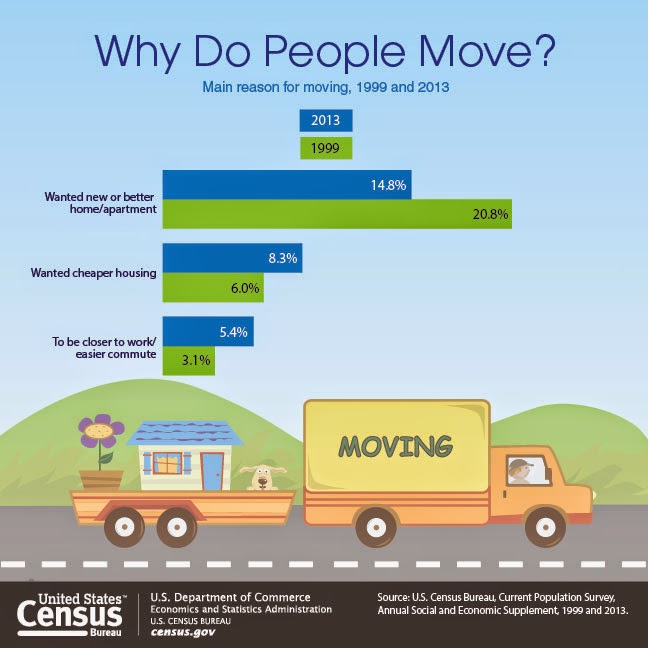
True or false: One of the top three reasons people move is to reduce the amount of time they spend commuting to work?

The correct answer is true.  According the the U.S. Census Bureau, about five percent of all moves are because people want to be closer to their place of work.  The average commute time in the U.S. is 25 minutes, it's about 18 minutes in Kansas.  Check out the graphic below to see what the top two reasons are for why people move.


Monday, June 9, 2014

Motoring Monday: Birdhouse Art Tour/Wetlands and Wildlife Scenic Byway


This Motoring Monday combines the beauty of the Wetlands and Wildlife Scenic Byway as well as the Birdhouse Art Tour in Great Bend. 

The byway is anchored by two of the largest wetland ecosystems in the world – the Cheyenne Bottoms Wildlife Area and Quivira Wildlife Refuge and extends along K-4, K-156 and several county roads in Barton, Reno and Stafford counties. The Cheyenne Bottoms attracts 45 to 90 percent of North America’s shorebirds and is home to 23 species of mammals, 19 species of reptiles and nine species of amphibians. The Refuge has an educational Visitors Center and several hiking trails.

Chicago may have its cows, but the city of Great Bend has birdhouses! More than 50 birdhouses, ranging in size from three to five feet tall are perched in front of businesses all over town in honor of the thousands of birds who are drawn here every year. The Birdhouse Art Tour has descriptions written by the artists themselves. 

To receive a brochure with all the birdhouse locations and descriptions, call Great Bend Convention and Visitors Bureau at 620-792-2750 or email tours@visitgreatbend.com

Friday, June 6, 2014

What's the key to successful public private partnerships?


As it becomes more and more difficult to acquire more tax revenue for transportation projects, it has many experts exploring ways to attract private money to pay for infrastructure improvements. A task force of the Eno Center for Transportation released a report last month looking at the nuts and bolts of making public-private partnerships (P3) succeed.  The task force, led by former U.S. transportation secretaries Norm Mineta and Mary Peters made recommendations for state and federal governments.

Here were the recommendations for state and local governments:

1.  Adopt effective enabling legislation.  Many governments have legislation that prevents these partnerships.  The task force recommends the enabling legislation have broad and flexible project eligibility, a transparent project selection process, funding regulations and contract provisions among other things.

2.  Establish appropriate institutional structures and management policies. The task force recommends that states create new institutions to manage P3 procurements efforts.  The report encourages states to develop standard practices and train staff effectively to partner with private companies.

3. Promote public engagement.  The final and perhaps most important piece is to engage the public early and often to improve project outcomes and build support.

Thursday, June 5, 2014

Throwback Thursday

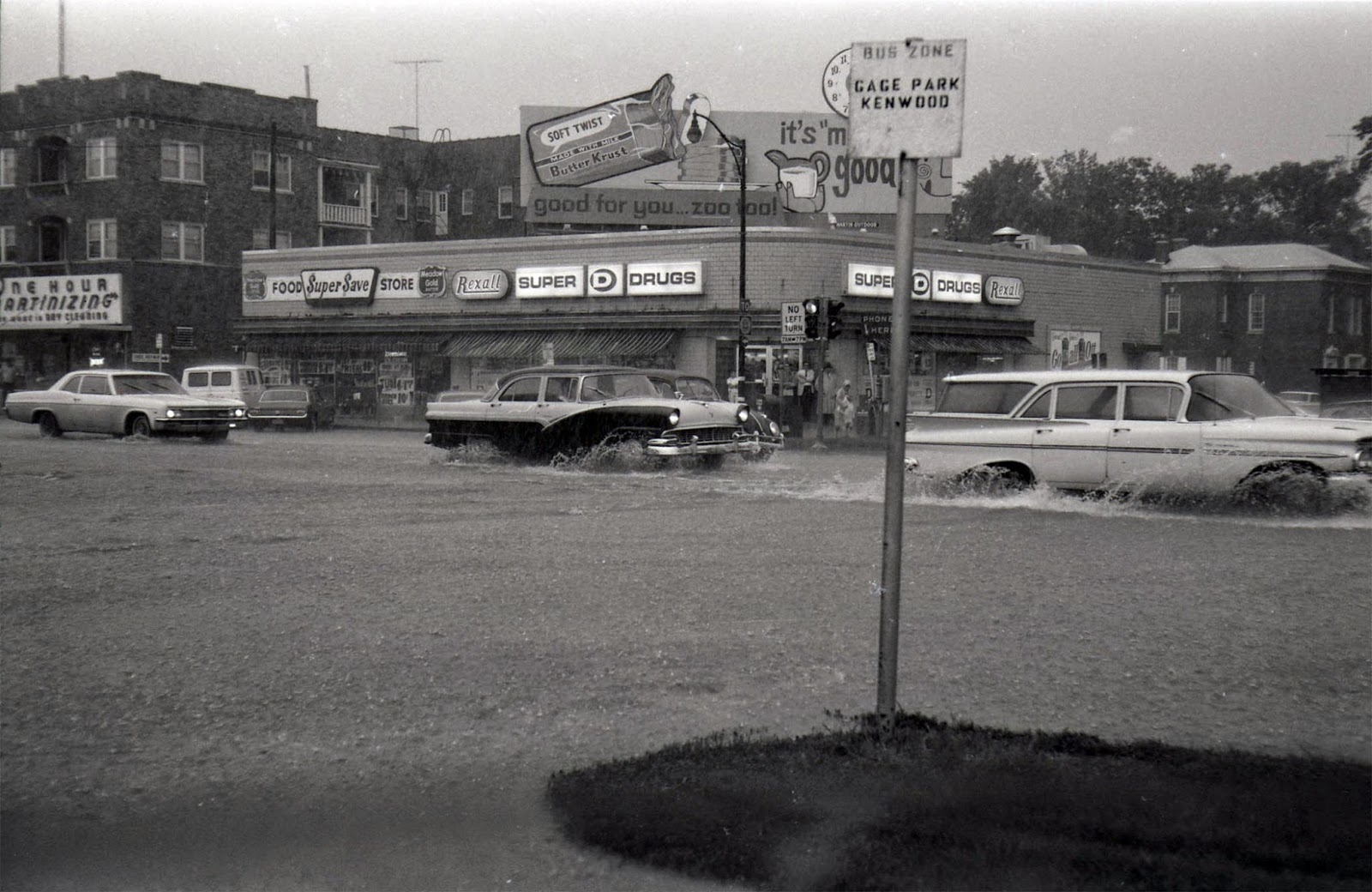
Today we're going back to June of 1967 in Topeka.  The city was dealing with some flooding.  Check out this shot, which was taken at the intersection of Topeka Blvd. & 10th St.