Showing posts with label snow plows. Show all posts

Tuesday, February 19, 2019

Don’t plow into our snow plows

Photo Courtesy: Kansas Highway Patrol. Traffic follows behind KDOT snow plows on Friday, Feb. 15.

This winter has felt like it has dragged on forever. Our crews have been out fighting snow more this season than in several winters’ past. Each time it snows, we encourage drivers to be more aware of our equipment on the roads.

“Don’t crowd the plows,” and “Help us help you, give our crews room.” 

Unfortunately, our crews still get hit and the results are usually very serious. Some drivers who have hit plows have lost their lives and others have walked away with a minor injuries and massive repair bill to their personal vehicles.

Last weekend, travelers smashed into five of our snow plows in Johnson County. And another plow was hit in the Topeka Metro Area on Friday night.

In an interview with KCTV5, Drake Jennings, KDOT Highway Maintenance Superintendent, said that drivers hit the plows when they were trying to pass them, before the lanes were even plowed. 
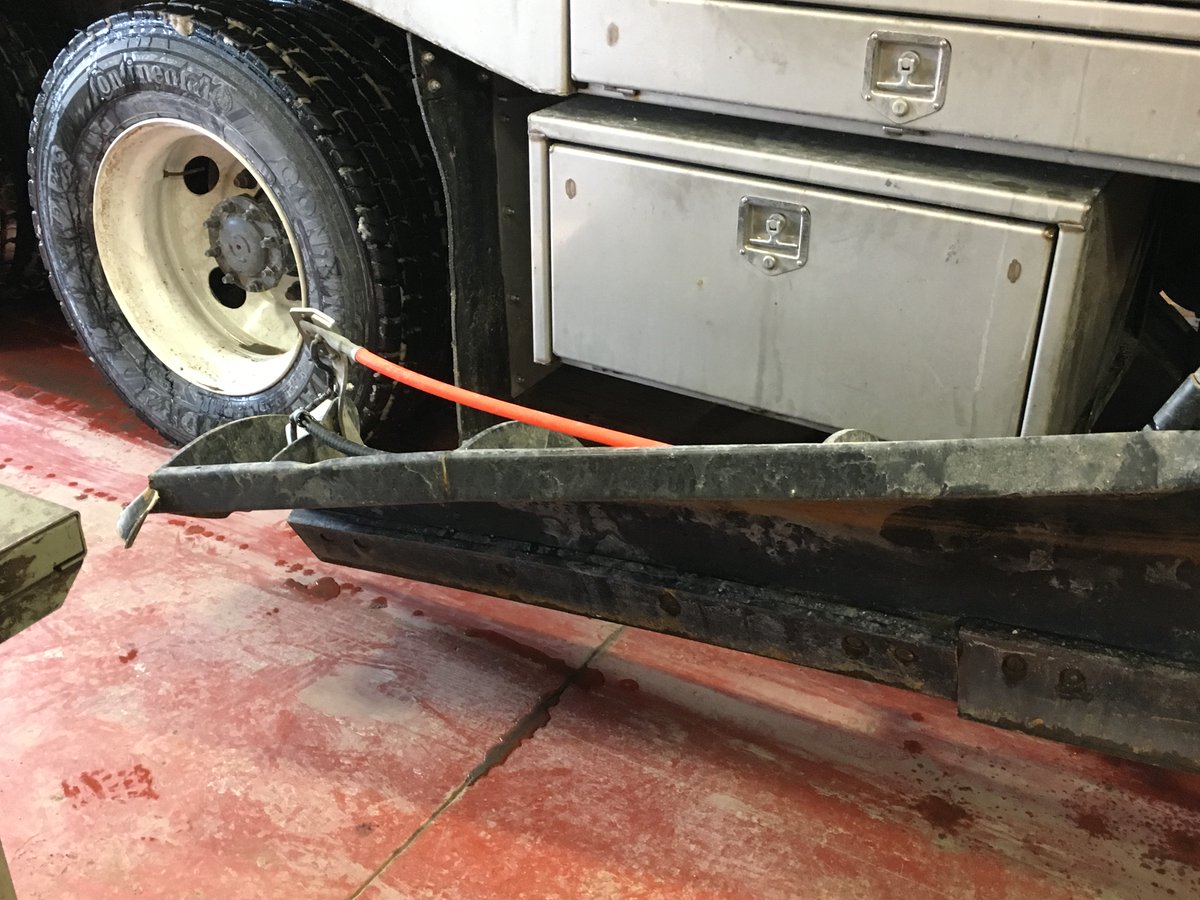
Damage to one of our plows, after it was struck by a vehicle from the past weekend's storm.

Even though our trucks could still operate, time was lost. Each time one of our trucks is hit, it takes time to fill out paperwork and assess the damage. Doing so can take an hour or more depending on how bad the situation is. 

When it comes to clearing roadways, losing time means the roadways can’t be cleared as quickly. 

During inclement weather there are some things we’d like drivers to keep in mind:

  1. Plow trucks drive at speeds slower than the posted speeds to help them direct snow properly and apply the right quantities of salt behind them.  Once snow or sleet start falling, mentally prepare for the fact that not only will be roads be slick, but also that you could come upon a slow-moving plow on your drive. 

  2. Don’t attempt to pass our trucks.  Many of the crashes with plow trucks involve drivers fish-tailing on the way around the plow. And, nNot only is the lane that is currently being plowed probably the safest lane to travel in, but visibility as you come around and in front of the plow is usually a lot worse   When road conditions are slick, we ask for a little extra patience from everyone so the roads can get treated quicker.

  3. Be aware that tow-plows can take up to two lanes and the blades could be hidden beneath the snow.  Visibility going around the plows is the factor in many of the crashes recently.
  4. It’s important for drivers to slow down for conditions, even when we’ve been out treating.  During winter conditions, especially as we transition into and out of storms, patchy ice is always a possibility, especially on bridges, ramps and overpasses. 

  5. Don’t drive distracted. On a normal day it takes 100 percent focus to drive safely, and in winter weather conditions that focus is even more crucial to driving safely.
Your KDOT crews work hard to serve Kansans, often putting their own lives on the line to keep our roads and highways safe. Please give our crews, emergency responders and law enforcement room to work when we are out on the roads, so we can get things back to normal as quickly and safely as possible.

Wednesday, January 10, 2018

Snow plows: Winter weather fighting machines

A KDOT Snow plow clears snow during a winter storm. There are 591 trucks across the state that can be used to clear snow and ice off roadways. 
Parts of the state may see some winter precipitation this week and KDOT crews are ready to combat inclement weather with some of the strongest winter weather fighting machines around: Snow plows and tow plows. 

KDOT has 591 trucks that can be used to clear snow and ice off of roadways.  Snow plows are a common sight during wintry months. These giant vehicles are essential to traveler safety and for helping commerce continue to move across the the state highway system.

A tow plow is a 26-foot-long, independently-steerable plow that can clear two lanes at a time. 
The tow plow is a 26-foot-long, independently-steerable mounted plow that can move  to the right or left. It allows a single driver to plow two lanes at a time and frees up other crew members who can concentrate on other highways needing snow removalTow plows are big and the truck pulling the tow plow is about the size of a semi-truck. There are seven of these distributed across the state to assist KDOT crews with fighting winter weather and they are located in Goodland, Colby, Hays, Salina, Ottawa, Bonner Springs and Olathe. 

While these tow plows are great for clearing multi-lane roads, do not try to pass them and don't crowd any of the plows as KDOT crews work to clear the roads. 

Check out this video where our talking cone friends, Mike and Earl, meet with a KDOT truck named Sandy to explain how tow plows work:


For road conditions check out www.kandrive.org or dial 511. 


Wednesday, January 11, 2017

Winter Ready Wednesday: Don't crowd the plow


Earlier in this blog series, we discussed how important snow plows are when it comes to combatting winter storms. When one of these winter weather tools is taken out of commission, it becomes an even bigger challenge to keep the roads open.


Last week, a KDOT snow plow was struck on I-70 as it was clearing the roads in Riley County. Fortunately, the KDOT snow plow operator was OK but the driver of the other vehicle was hospitalized and I-70 was shut down for approximately two hours as crews worked to clear the debris.

KDOT wants to remind drivers that during and after a winter storm, KDOT snow plows need extra room to safely clear the roads. Below is a video explaining what happens when a plow was struck a few years ago:

Troy Whitworth, Assistant to the Director for the Division of Operations, said that the most stressful time for a snow plow operator is when the roads start to improve and the lanes are mostly clear.

“Once the roads start to improve, the traffic speeds up,” Whitworth said. “Our trucks plow at slower speeds than the traffic around them for safety reasons. Sometimes even with the strobes flashing on our trucks the traffic will misjudge the speed difference. That is when the inattentive driver can end up in the ditch or impact our plow truck. “

Winter weather will be returning to the area soon.  Check out this video below for some tips when sharing the road with a KDOT snow plow:


Wednesday, December 7, 2016

Winter Ready Wednesdays: Plowing roadways


The average daily value of freight moving across Kansas highways is more than $606 million. What would happen to our economy if those roads were impassable due to snow and ice?

Parts of the state may see some winter precipitation today and KDOT crews are ready to combat inclement weather with some of the strongest winter weather fighting machines around: Snow plows.

KDOT has 591 trucks that can be used to clear snow and ice off of roadways.  Snow plows are a common sight during wintery months. These giant vehicles are essential to traveler safety and for ensuring that commerce continues to move across the 10,000 miles (25,000 lane miles) of the state highway system.


 For a second year, motorists may get a chance to see another winter weather weapon: The tow plow. 


The tow plow is a 26-foot-long, independently-steerable mounted plow that covers the right side of the lane. It allows a single driver to plow two lanes at a time and frees up other crew members who can concentrate on other highways needing snow removal. 

Last year, KDOT tested two of these plows in two different parts of the state. One tow plow was tested in Olathe’s heavy traffic. Another plow was tested in Colby due to its rural area and windier climate along the highways. KDOT has plans to purchase more tow plows in the future. 

Whether or not your area sees snow today, you can be sure that KDOT crews will be ready to operate these hefty machines in an effort to keep Kansas moving. 


As the winter months move in, KDOT will use a variety of methods to clear roads and infrastructure and help Kansans travel safely.  For the next several Wednesdays, we will share with you more ways that KDOT works to keep Kansas moving during inclement weather.

For up to date road conditions, check kandrive.org or dial 51
1.