Showing posts with label Winter Ready Wednesdays. Show all posts

Wednesday, January 18, 2017

Winter Ready Wednesdays: Ice storm recap


For nearly a week, Kansans were told a cautionary tale about the impending ice storm that hit last weekend. While the resulting aftermath of the storm wasn’t as far-reaching as predicted, for many, this storm was still treacherous.

At its worst, thousands of Kansans were without power for several hours as power lines snapped due to the weight of ice and fallen tree branches. Some are still waiting for power to return.

While the power may have been off, KDOT crews were hard at work ensuring that state highways and roads were safe for travel.

KDOT crews put in a combined 25,000 hours of work as they cleared the roads over the weekend. During the ice storm, 12,000 tons of salt and 13,000 tons of salt and sand mix were also used to keep roads from freezing and to provide better traction. A total of 1.3 million gallons of brine were applied to surfaces.

For an idea of how icy it was, check out this video of a state trooper who narrowly avoided a horrible crash with an out-of-control semi on I-70 in Russell County. 


While your area may not have been as heavily affected  by this storm as predictedKDOT still recommends taking weather alerts seriously and to check KanDrive.org and call 511 before you travel during the next winter storm. 

Wednesday, January 4, 2017

Winter Ready Wednesdays: Coats and cars


This winter, whether your family jumps in the car for a drive to the grocery store or to grandma's house, buckling up is one of the best ways to ensure safely. It is always a good idea to buckle your child in an age and weight appropriate car seat or booster seat. But during these cold months, it can be hard to tell if your child is fastened in securely while they are wearing heavy winter coats. 

Below is a graphic with some suggestions on how to ensure that your entire family is prepared to travel safely and warmly this winter. 

Wednesday, December 28, 2016

Winter Ready Wednesdays: Should you warm up your vehicle?


We all have heard this advice from time to time: "You need to let your car warm up before you drive it."


But if you a driving a car that uses fuel injection, allowing your car to sit idle in your driveway on a cold day is not only unnecessary, it may actually do more harm than good to your car.


The following video explains why idling your car can lead to a damaged engine:
As the video explains, the misconception is based on fact. Prior to the late 1980s, vehicles used carburetors which really did need more time to warm up for the engine to work efficiently and safely.

Today, most mechanics suggest allowing modern engines to warm for about 30 seconds prior to driving. They also suggest that driving your car gently at first helps to avoid unnecessary wear and tear on the engine.

On cold, dry days it may be a good idea to enjoy that last sip of coffee a little longer before you head out into the chilly weather.


If you are unsure about what your car needs to make it through the winter, check with your mechanic. 

Wednesday, December 21, 2016

Winter Ready Wednesdays: Q&A with District 1 Maintenance Superintendent Drake Jennings


According to a popular song, many of us are probably dreaming of a White Christmas this year. While snow can be beautiful and fascinating, not everyone gets to experience it from the comforts of home. KDOT maintenance crews work tirelessly to ensure that Kansas keeps moving during inclement weather.

We interviewed District 1 Maintenance Superintendent out of Olathe, Drake Jennings, about his experiences during inclement weather and what his crew goes through as they plow the roads and clear the way.
Q. Not every snow storm is the same. What it is like to go out and face extreme weather to keep the roadways clear?

 A.
It’s extremely hard work; most people think it’s just driving a truck. But not only are you driving that truck, you are operating the plow, the wing plow, and the hopper applying salt to the roadways. On top of that, you have to watch the road to keep your truck in the lane you’re plowing, and of course watch all the other traffic at the same time.

Q. How long can it take to clear the roads in your area?

 A.
The time to remove the snow depends on the amount. A three-inch snow will usually take us about three days to clean it up. If we get a big snow storm it can take us up to two weeks to clean it up.

Q. Can you name a particular time when inclement weather required a lot of manpower to fight the storm?


 A.
I think it was in 2003 or 2004, we got a big storm. It was a mixture of ice and snow, it was extremely hard for us to keep our trucks on the road because of all the ice. I was in a truck treating on the ramp from eastbound 435 to State Line Road. I was treating the high side of the ramp, when my truck slid from one side of the ramp to the other. It was like that all over Johnson County. I remember that storm because my kids were very young. I got called out in the middle of the night on Christmas Eve. My kids woke up Christmas morning to see what Santa brought them without me, they were extremely upset and couldn’t understand why their dad had to go to work and miss Christmas morning with them. I tried to explain to them that sometimes dad has to go to work to make the roads safe, so all of the other dads could get home to spend time with their kids. They said it just wasn’t fair. They never did think it was ever fair, but they did realize that what I did on that Christmas Day was so others could get home safe to celebrate with their families. 


Q. What is it like for KDOT crews to go out into a snow storm, clear the roads during treacherous weather and then try to return to some normalcy when the work is finished?  


 A.
It’s extremely hard, adrenaline is running very high, it’s what helps the guys get through the long hours and hard work. During a storm we split into two shifts, my day crews work from 8 a.m to 8 p.m., then my night crews work from 8 p.m. to 8 a.m. Those are long 12-hour shifts and it takes a special kind of person to do what my employees do. Depending on how many days we work those hours, it sometimes takes three to four days for the operators to get back to their normal routine, it messes with their diet and their sleeping.

Q. Is there anything you want our readers to understand when KDOT crews are out on the roads?

 A.
Just give us room to work. It takes us a while to get the roads back to normal, especially if we get ice then snow, and the temperatures are really cold. Please be patience and give us time to do our jobs.

Wednesday, December 14, 2016

Winter Ready Wednesdays: Cold weather vehicle care


Snow is in the forecast once again this weekend. Is your vehicle prepared for travel? Extreme temperatures can be especially hard on cars. Here are some winterizing tips for your vehicle.

Make sure your car has enough of the fluids listed below:


Coolant: To keep your water from freezing inside your radiator, make sure you have the correct antifreeze/water ratio. All vehicles are different, check your owner’s manual or mechanic to make sure.

Oil: Make sure your oil is full and clean to avoid sludgy buildup.

Wiper fluid:  Because your windshield can become obstructed by slush and mud, windshield wiper fluid is an important tool during the winter. Check these levels often and use this time to inspect your wipers as well.  

It is a good idea to have back-up containers of these fluids in your vehicle.

Inspect your battery: Cold weather can kill batteries, and could leave you stranded. Inspect your car battery's wires for cracks and breaks. Inspect the connections for any corrosion and if your battery is three years old or more, get it inspected. 

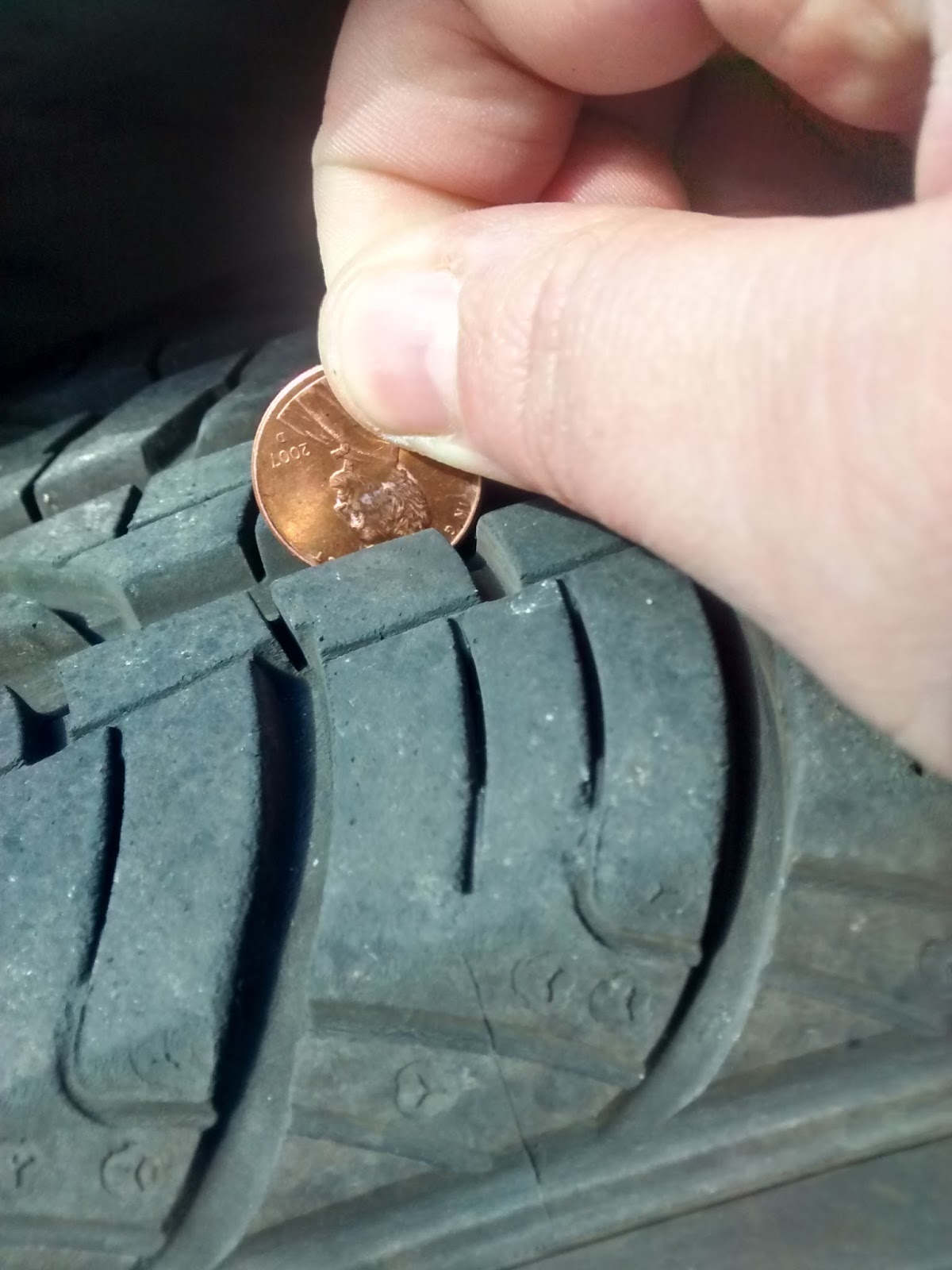
Check your tires: Think of your tires as the sneakers for your car. If your sneakers are worn down you could slip on the ice. The same thing can happen with little or no tread on your tires. A good way to tell if you have plenty of tread is to place a penny in the grooves. If the top of Lincoln’s head is partially covered then you have enough tread.


Another important tire element to remember is tire pressure.  Every 10 degree change in outside temperature can cause your tire’s pressure to gain or lose one PSI.

Fill ‘er up
: It is always wise to keep your gas tank at least half full during the colder months. If your tank is below half, it the chance of a gas line freeze increases. A full gas tank full also ensures that you can stay warmer longer if you become stranded while traveling.

Check your car’s heater and defrost:
You may be able to survive quick trips without a working car heater but if the defrost doesn’t work, driving can become dangerous.  During inclement weather, snow and ice can build up fast on your windshield and visibility can disappear rapidly.  Don’t wait until the last minute to get this fixed.


And finally, before you take to the road, remember that one of the best ways to be prepared is to check the road conditions at Kandrive.org or by dialing 511. 

Wednesday, December 7, 2016

Winter Ready Wednesdays: Plowing roadways


The average daily value of freight moving across Kansas highways is more than $606 million. What would happen to our economy if those roads were impassable due to snow and ice?

Parts of the state may see some winter precipitation today and KDOT crews are ready to combat inclement weather with some of the strongest winter weather fighting machines around: Snow plows.

KDOT has 591 trucks that can be used to clear snow and ice off of roadways.  Snow plows are a common sight during wintery months. These giant vehicles are essential to traveler safety and for ensuring that commerce continues to move across the 10,000 miles (25,000 lane miles) of the state highway system.


 For a second year, motorists may get a chance to see another winter weather weapon: The tow plow. 


The tow plow is a 26-foot-long, independently-steerable mounted plow that covers the right side of the lane. It allows a single driver to plow two lanes at a time and frees up other crew members who can concentrate on other highways needing snow removal. 

Last year, KDOT tested two of these plows in two different parts of the state. One tow plow was tested in Olathe’s heavy traffic. Another plow was tested in Colby due to its rural area and windier climate along the highways. KDOT has plans to purchase more tow plows in the future. 

Whether or not your area sees snow today, you can be sure that KDOT crews will be ready to operate these hefty machines in an effort to keep Kansas moving. 


As the winter months move in, KDOT will use a variety of methods to clear roads and infrastructure and help Kansans travel safely.  For the next several Wednesdays, we will share with you more ways that KDOT works to keep Kansas moving during inclement weather.

For up to date road conditions, check kandrive.org or dial 51
1.