Showing posts with label winter. Show all posts

Tuesday, February 19, 2019

Don’t plow into our snow plows

Photo Courtesy: Kansas Highway Patrol. Traffic follows behind KDOT snow plows on Friday, Feb. 15.

This winter has felt like it has dragged on forever. Our crews have been out fighting snow more this season than in several winters’ past. Each time it snows, we encourage drivers to be more aware of our equipment on the roads.

“Don’t crowd the plows,” and “Help us help you, give our crews room.” 

Unfortunately, our crews still get hit and the results are usually very serious. Some drivers who have hit plows have lost their lives and others have walked away with a minor injuries and massive repair bill to their personal vehicles.

Last weekend, travelers smashed into five of our snow plows in Johnson County. And another plow was hit in the Topeka Metro Area on Friday night.

In an interview with KCTV5, Drake Jennings, KDOT Highway Maintenance Superintendent, said that drivers hit the plows when they were trying to pass them, before the lanes were even plowed. 
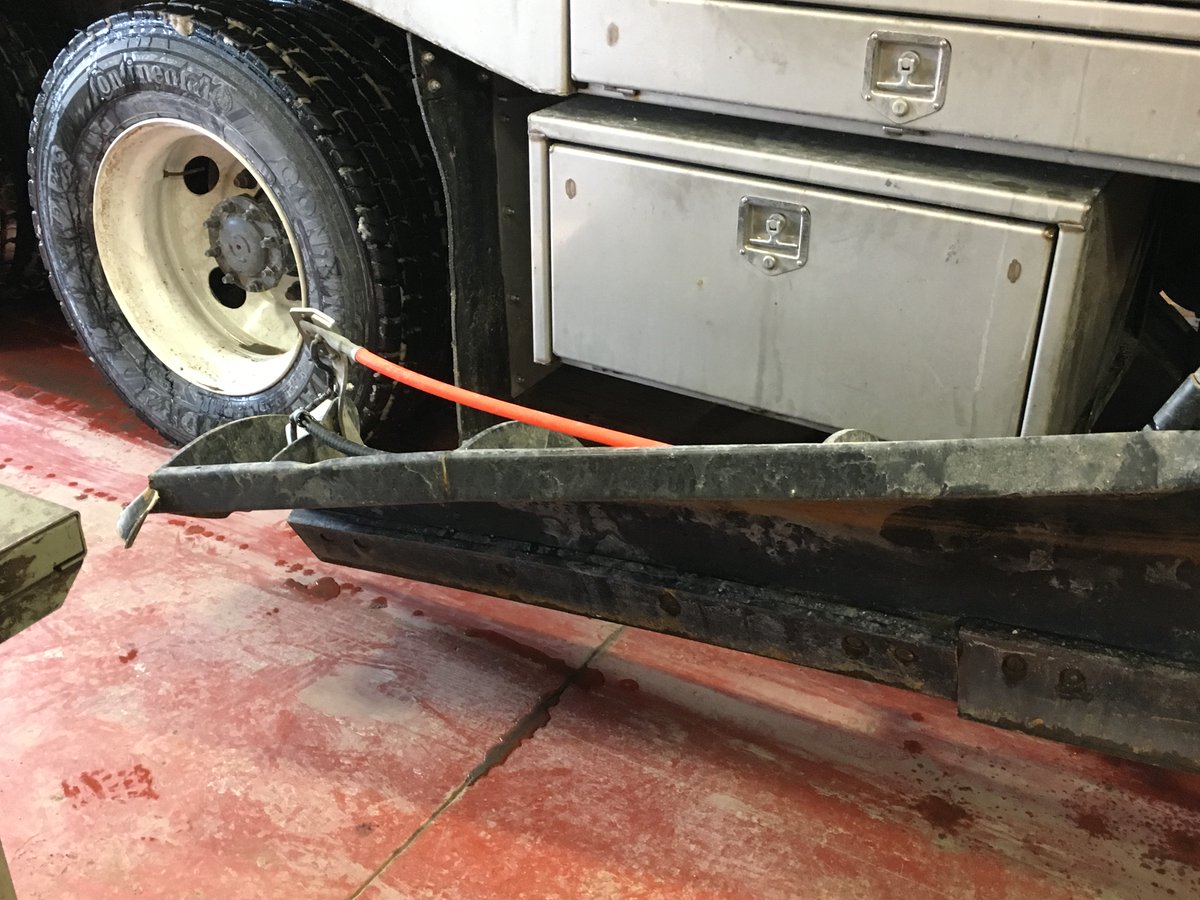
Damage to one of our plows, after it was struck by a vehicle from the past weekend's storm.

Even though our trucks could still operate, time was lost. Each time one of our trucks is hit, it takes time to fill out paperwork and assess the damage. Doing so can take an hour or more depending on how bad the situation is. 

When it comes to clearing roadways, losing time means the roadways can’t be cleared as quickly. 

During inclement weather there are some things we’d like drivers to keep in mind:

  1. Plow trucks drive at speeds slower than the posted speeds to help them direct snow properly and apply the right quantities of salt behind them.  Once snow or sleet start falling, mentally prepare for the fact that not only will be roads be slick, but also that you could come upon a slow-moving plow on your drive. 

  2. Don’t attempt to pass our trucks.  Many of the crashes with plow trucks involve drivers fish-tailing on the way around the plow. And, nNot only is the lane that is currently being plowed probably the safest lane to travel in, but visibility as you come around and in front of the plow is usually a lot worse   When road conditions are slick, we ask for a little extra patience from everyone so the roads can get treated quicker.

  3. Be aware that tow-plows can take up to two lanes and the blades could be hidden beneath the snow.  Visibility going around the plows is the factor in many of the crashes recently.
  4. It’s important for drivers to slow down for conditions, even when we’ve been out treating.  During winter conditions, especially as we transition into and out of storms, patchy ice is always a possibility, especially on bridges, ramps and overpasses. 

  5. Don’t drive distracted. On a normal day it takes 100 percent focus to drive safely, and in winter weather conditions that focus is even more crucial to driving safely.
Your KDOT crews work hard to serve Kansans, often putting their own lives on the line to keep our roads and highways safe. Please give our crews, emergency responders and law enforcement room to work when we are out on the roads, so we can get things back to normal as quickly and safely as possible.

Tuesday, January 22, 2019

After the storm: Crews repair damage to signs


It’s no surprise that when snow moves in, KDOT crews get to work.  But have you ever wondered what happens after the storm hits?  Believe it or not, it can be busier after the roads are clear, especially following blizzard conditions or ice.

Following a snow event, subarea crews must get equipment to the shop for maintenance and repairs as all that ice, snow, sand and salt are hard on the trucks and spreaders.  In addition, the same crews are tasked with inventorying sand, salt and brine and restocking depleted inventories.  They are also the same crews that are out after the storm repairing signs, filling potholes and repairing guardrails that are damaged during the event. 

KDOT Garden City Subarea crew members repair a sign after the Dec. 27 blizzard. 


For example, following the Dec. 27 blizzard, which blew in with 50 mph winds and dumped up to 8-12 inches of snow across western Kansas, crews were back out in the cold and snow repairing a sign on U.S. 50 west of Garden City. A casualty of the storm, this sign had already been repaired two weeks earlier, but was damaged when a motorist slid across the ramp hitting the sign according to Hector Terrones, the Highway Maintenance Supervisor for the Garden City Subarea.

“Digging post holes in frozen ground isn't easy.  But we needed to get the sign back up, so we made it work by using a blowtorch to thaw the ground,” said Terrones.

Terrones and Equipment Operator Jesse Casanova, raised the post and positioned it. Finally, Equipment Operator Ciro Chavez, attached the sign to the post while Hector and Jesse adjusted the post to straighten the sign.

It is thanks to KDOT crews, who brave the snow and the cold, that Kansans can continue to travel our state’s highways.

Thursday, January 3, 2019

Enjoy riding your bike in the winter — with preparation


Riding a bike in the winter can still be an enjoyable experience, if you prepare correctly.
Photo Courtesy: Andrew Escandon
By Mallory Goeke
KDOT Communications Specialist

Riding a bike during the winter is not as crazy as some people may think. We should know: We asked our social media followers who ride their bikes this time of year and received so many responses. Biking when it’s cold outside may not be for everyone, but according to these winter bicyclists, you can hop on those two wheels and take off with some planning.
Megan Merryman said one of the challenges bikers face is other drivers.

“Staying safe during winter cycling is a bit tricky and challenging,” Merryman said. “Drivers are not expecting to see cyclists out on the roads this time of year, and visibility can be questionable on any given day. Plus, conditions can change quickly. It can be perfectly clear all day and then the low clouds and fog can settle in late in the day, which makes my evening commute a little dicey.”

Merryman suggests wearing reflective clothing while riding a bike because the days are shorter and they increase your chance of being seen.

“For commuting, my bike panniers have large reflective squares on them, and my cycling jacket has a reflective stripe on the back,” Merryman said.
Nancy Naethe Baker agrees and adds that staying aware of where you ride is also important.

“Biking in the winter frequently means lower light, even during daylight hours, so I make sure my clothes are bright and reflective, and I have a headlight and taillight on at all times,” Baker said. “I'm also more cautious about which roads I ride and what times I'm on them -- the difference in light levels, different sunrise and sunsets, and angle of the sun all mean changes in when the drivers have the sun in their eyes and are less able to see a cyclist at the side of the road.  I am aware of these things in other seasons, but they're all more prevalent during late fall and winter.”

Vincent Needham said it’s important to have a kit you can mix and match to meet the conditions you are riding in.

 “Versatility is key here, since morning and evening conditions can be quite different,” Needham said. “Modern LED lights are small and convenient, and I never actually take them off the commuter bike. It concerns me when I see out students riding without lights in winter darkness, and I've donated several sets of lights in an effort to fix that.”
Andrew Escandon, a volunteer at the Topeka Community Cycle Project, said when it comes to winter biking, preparation is key and the clothes you wear can make a big difference.
“Staying warm and comfortable is almost as important as staying visible,” Escandon said. “If you don’t wear adequate gloves and your fingers go numb, your ability to brake in time for unexpected obstacles greatly decreases.”

Escandon said dressing properly is different for everyone, and it’s important to find out what works for you.
Protecting yourself from the elements is key to winter bike riding. Photo Courtesy: Andrew Escandon

“For my face, I try and think of dressing as if I were going sledding or skiing,” Escandon said. “When it’s really cold, I wear a balaclava, scarf or face mask. The one drawback to this is the warm air from your breath will fog up most eyewear. To solve this problem, I invested in a snowboard helmet and ski goggles. The lens is positioned farther away from your face, which reduces fogging, and you can wear prescription eyewear underneath them.”
Merryman said being comfortable while riding a bike in the cold is easier if you dress in layers that are easy to remove.

One factor that is important to remember is how easy it is to overheat, even in the cold weather.

“You’d be surprised once your core is warmed up from the exercise how much easier it is to overheat in the winter,” Escandon said.  “When it’s between 18-25 degrees F, I’ll wear a base layer, fleece jacket and wind layer. The wind chill at those temperatures can be really uncomfortable. Anything over 30F, and I tend to leave off the wind layer, as it traps heat and makes you sweat more. The worst part is usually the start. It feels a lot colder than you will be once you’ve been pedaling for 15 minutes. More often than not, I end up over-dressing and have to stop to remove layers.”

One common caution we heard from winter bicyclists is that riding in the snow and ice can be tricky, especially when it comes to braking.

Baker said while she chooses not to ride on snow and ice, there are times when she’ll run into an icy patch on the road.

“I do not ride on ice, but if there's a patch I didn't expect and can't avoid, I coast over it -- no pedaling, no brakes, and no attempts to steer as any of those things can cause the bike to slide out of control,” Baker said.

Out of the many responses we received, only a small handful said they would try to ride their bikes if there were snow and ice on the roads. Most said they choose to wait until the roads are clear.

If you do choose to try to ride in the snow and ice, wider tires are available that can handle snow, and you would also want to use tires with studs in them to increase traction when it’s icy. Following the same rules as driving a car during inclement weather can still be followed:
  • Slow down
  •  Don’t brake suddenly
  •  Maintain a safe distance
  • Plan for more time to reach your destination.
Thanks to everyone who answered our questions! Do you think you’d ever try riding a bike in the winter?

Tuesday, December 18, 2018

Winter weather driving tips


By Ashley Tammen, 
KDOT Public Affairs Manager for north central Kansas

It’s snowing outside as you put on your shoes to go scrape off your car and head to work. You decide to warm up your car first and are not worried about driving in the snow because it’s just a car and you know how to drive one of those. But do you know how to drive  during inclement weather? Driving in these conditions can be quite challenging for travel due to slippery snow or ice. Poor traction may make your vehicle harder to control. It is important to review how to drive safely in the winter, especially if it’s the first snow of the year or you are new to driving. Here are some winter driving tips recommended by AAA Club Alliance:
  • Make certain your tires are properly inflated.
  • Never mix radial tires with other tire types.
  • Keep your gas tank at least half full to avoid gas line freeze-up.
  • If possible, avoid using your parking brake in cold, rainy and snowy weather.
  • Do not use cruise control when driving on a slippery surface).
  • Watch weather reports prior to a long-distance drive or before driving in isolated areas. Delay trips when especially bad weather is expected. If you must leave, let others know your route, destination and estimated time of arrival.
  • Make sure the exhaust pipe isn’t clogged with snow, ice or mud. A blocked exhaust could cause deadly carbon monoxide gas to leak into the passenger compartment with the engine running.
  • Accelerate and decelerate slowly. Applying the gas slowly to accelerate is the best method for regaining traction and avoiding skids. Don’t try to get moving in a hurry. And take time to slow down for a stoplight. Remember: It takes longer to slow down on icy roads.
  • The normal dry pavement following distance of three to four seconds should be increased to eight to 10 seconds. This increased margin of safety will provide the longer distance needed if you have to stop.
  • The best way to stop is threshold breaking.  To do this, keep the heel of your foot on the floor and use the ball of your foot to apply firm, steady pressure on the brake pedal.
  • Don’t stop going up a hill. There’s nothing worse than trying to get moving up a hill on an icy road. Get some speed going on a flat roadway before you take on the hill.

Travel safe this winter and visit www.kandrive.org for up to date travel conditions.

Thursday, November 8, 2018

Winter weather driving tips

Snow is falling across parts of the state. Here are a few winter weather driving tips for everyone to keep in mind. Be ready for rapidly changing road conditions and adjust your driving for the weather around your vehicle. 


Remember — for consistently-updated road conditions, check www.kandrive.org

Wednesday, February 7, 2018

Winter weather safety and kits are important, here's why:

You never know when you are going to need a winter safety kit, and that is why you should always have one on hand. Inclement winter weather can cause traffic nightmares for anyone at any time and it is always best to be prepared.


In this drone video from earlier this week, a crash on I-44 just outside of Springfield, Mo., forced officials to close the highway for 15 hours. Two people were killed, and at least 60 vehicles were involved. 


Practicing safe winter weather driving and packing an emergency kit is essential for scary situations just like this one. 

Winter is not over yet, here's our recommended list that you should pack during these cold winter months:


  • A flash light
  • Extra warm clothing
  • Extra batteries
  • Extra Vehicle Fluid
  • A shovel
  • Battery-powered radio
  • Non-perishable snack food
  • Bottled water
  • Matches and candles
  • First aid kit
  • Pocket knife
  • Tow chain and/or rope
  • Booster cables
  • Road flares
  • Fluorescent Distress flag
  • Blankets 


Thursday, December 14, 2017

State agencies urge winter weather preparedness during the holiday season

Here are some items that you can include in your winter weather travel kit. 

Prior to the upcoming winter weather season, the Kansas Department of Transportation, Kansas Turnpike Authority, and the Kansas Highway Patrol are urging motorists to travel safely and prepare for winter road conditions wherever they travel.

Road conditions in the state can be checked utilizing KDOT’s KanDrive site, www.kandrive.org. KanDrive provides map views of road conditions and closures, real-time camera views of current highway conditions, and links to road information for neighboring states. You can also call 5-1-1 from any phone in the state for a recording of road conditions.


The state encourages you to make sure your vehicle is prepared ahead of the storm season, when ice, snow or rain, as well as colder temperatures can make driving more difficult.  Check your wiper blades, tire treads, wiper fluid levels, and that in general your vehicle is in good mechanical working order, including your emergency flashing lights. It is recommended you keep a winter weather emergency kit in your vehicle at all times. Emergency kits should contain item such as: 
  • A flash light
  • Extra warm clothing
  • Extra batteries
  • Extra Vehicle Fluid
  • A shovel
  • Battery-powered radio
  • Non-perishable snack food
  • Bottled water
  • Matches and candles
  • First aid kit
  • Pocket knife
  • Tow chain and/or rope
  • Booster cables
  • Road flares
  • Fluorescent Distress flag
  • Blankets 
Here's a fun activity to teach youngsters how to dress warmly for winter travel. Don't forget a snow shovel in case you get stuck! 
When winter weather occurs, motorists should prepare to leave early and allow extra time for travel.  Frost and snow should be completely cleared off all windows, mirrors and lights to provide maximum visibility.


If you encounter winter weather while traveling: 
  • Accelerate and brake gently.
  • Increase following distance between you and other vehicles.
  • Do not use cruise control when traveling in wet, icy or snowy conditions.
  • Always buckle up and ensure your children are in appropriately-fitted child-safety seats.
  • If you become involved in a non-injury crash, which does not involve hazardous materials, Kansas law requires you to move your vehicle out of the lane of travel to protect yourself, as well as other motorists.
  • Dress for conditions. Make sure you have a coat, gloves, appropriate footwear, etc. if you are traveling in winter weather.
  • Let loved ones know your route of travel. 
If you need help on a Kansas highway, call *47 for the Kansas Highway Patrol or call *KTA for the Kansas Turnpike Authority.

If you have an active K-TAG from the Kansas Turnpike Authority, you can use the electronic lanes on Oklahoma and Texas tollroads. Verify your K-TAG account is active and ready for travel by logging into your online account (www.myktag.com), by calling (800) USE-KTAG or by using the PayIt Kansas mobile app.


Wednesday, December 21, 2016

Winter Ready Wednesdays: Q&A with District 1 Maintenance Superintendent Drake Jennings


According to a popular song, many of us are probably dreaming of a White Christmas this year. While snow can be beautiful and fascinating, not everyone gets to experience it from the comforts of home. KDOT maintenance crews work tirelessly to ensure that Kansas keeps moving during inclement weather.

We interviewed District 1 Maintenance Superintendent out of Olathe, Drake Jennings, about his experiences during inclement weather and what his crew goes through as they plow the roads and clear the way.
Q. Not every snow storm is the same. What it is like to go out and face extreme weather to keep the roadways clear?

 A.
It’s extremely hard work; most people think it’s just driving a truck. But not only are you driving that truck, you are operating the plow, the wing plow, and the hopper applying salt to the roadways. On top of that, you have to watch the road to keep your truck in the lane you’re plowing, and of course watch all the other traffic at the same time.

Q. How long can it take to clear the roads in your area?

 A.
The time to remove the snow depends on the amount. A three-inch snow will usually take us about three days to clean it up. If we get a big snow storm it can take us up to two weeks to clean it up.

Q. Can you name a particular time when inclement weather required a lot of manpower to fight the storm?


 A.
I think it was in 2003 or 2004, we got a big storm. It was a mixture of ice and snow, it was extremely hard for us to keep our trucks on the road because of all the ice. I was in a truck treating on the ramp from eastbound 435 to State Line Road. I was treating the high side of the ramp, when my truck slid from one side of the ramp to the other. It was like that all over Johnson County. I remember that storm because my kids were very young. I got called out in the middle of the night on Christmas Eve. My kids woke up Christmas morning to see what Santa brought them without me, they were extremely upset and couldn’t understand why their dad had to go to work and miss Christmas morning with them. I tried to explain to them that sometimes dad has to go to work to make the roads safe, so all of the other dads could get home to spend time with their kids. They said it just wasn’t fair. They never did think it was ever fair, but they did realize that what I did on that Christmas Day was so others could get home safe to celebrate with their families. 


Q. What is it like for KDOT crews to go out into a snow storm, clear the roads during treacherous weather and then try to return to some normalcy when the work is finished?  


 A.
It’s extremely hard, adrenaline is running very high, it’s what helps the guys get through the long hours and hard work. During a storm we split into two shifts, my day crews work from 8 a.m to 8 p.m., then my night crews work from 8 p.m. to 8 a.m. Those are long 12-hour shifts and it takes a special kind of person to do what my employees do. Depending on how many days we work those hours, it sometimes takes three to four days for the operators to get back to their normal routine, it messes with their diet and their sleeping.

Q. Is there anything you want our readers to understand when KDOT crews are out on the roads?

 A.
Just give us room to work. It takes us a while to get the roads back to normal, especially if we get ice then snow, and the temperatures are really cold. Please be patience and give us time to do our jobs.

Wednesday, December 14, 2016

Winter Ready Wednesdays: Cold weather vehicle care


Snow is in the forecast once again this weekend. Is your vehicle prepared for travel? Extreme temperatures can be especially hard on cars. Here are some winterizing tips for your vehicle.

Make sure your car has enough of the fluids listed below:


Coolant: To keep your water from freezing inside your radiator, make sure you have the correct antifreeze/water ratio. All vehicles are different, check your owner’s manual or mechanic to make sure.

Oil: Make sure your oil is full and clean to avoid sludgy buildup.

Wiper fluid:  Because your windshield can become obstructed by slush and mud, windshield wiper fluid is an important tool during the winter. Check these levels often and use this time to inspect your wipers as well.  

It is a good idea to have back-up containers of these fluids in your vehicle.

Inspect your battery: Cold weather can kill batteries, and could leave you stranded. Inspect your car battery's wires for cracks and breaks. Inspect the connections for any corrosion and if your battery is three years old or more, get it inspected. 

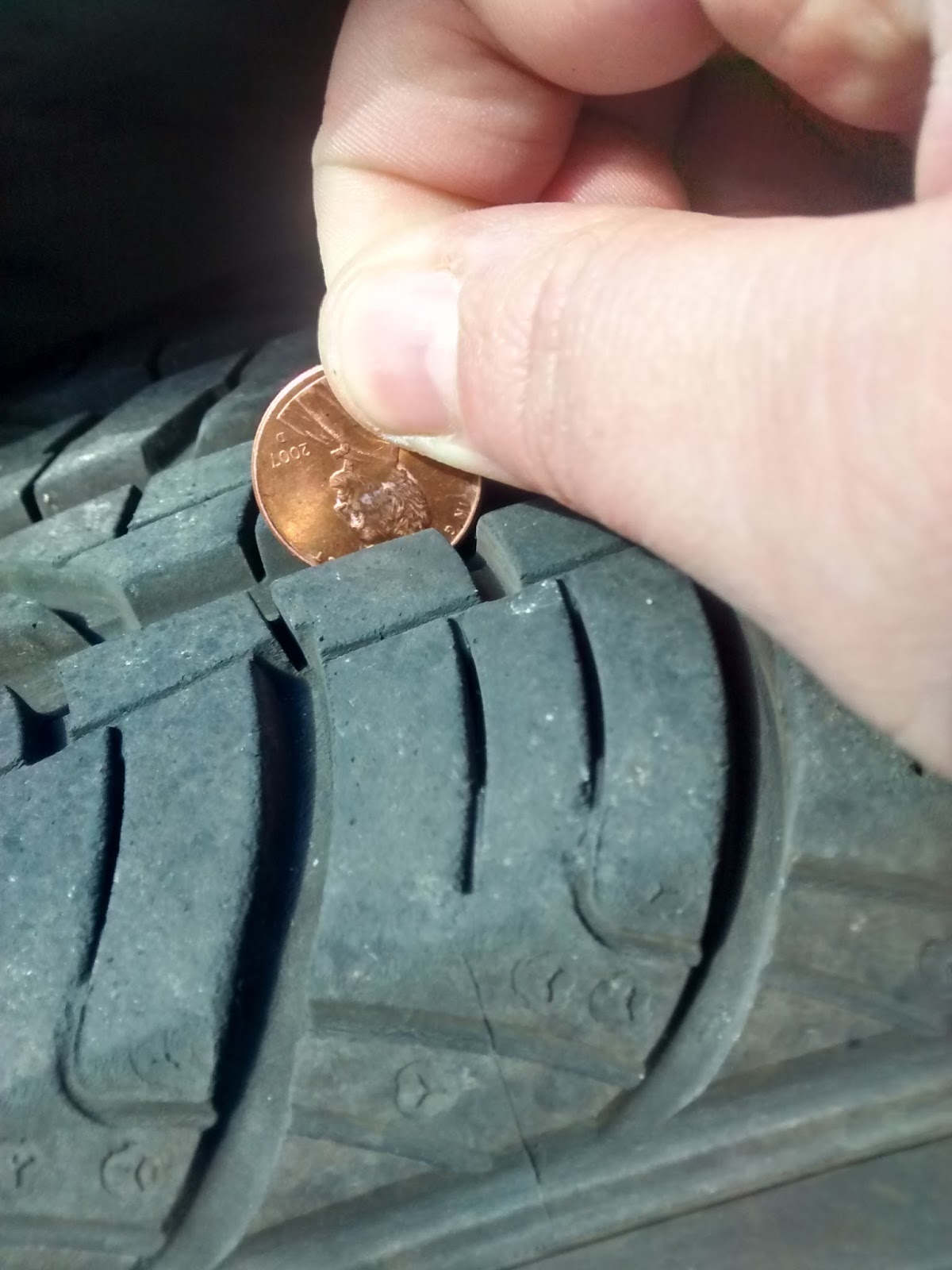
Check your tires: Think of your tires as the sneakers for your car. If your sneakers are worn down you could slip on the ice. The same thing can happen with little or no tread on your tires. A good way to tell if you have plenty of tread is to place a penny in the grooves. If the top of Lincoln’s head is partially covered then you have enough tread.


Another important tire element to remember is tire pressure.  Every 10 degree change in outside temperature can cause your tire’s pressure to gain or lose one PSI.

Fill ‘er up
: It is always wise to keep your gas tank at least half full during the colder months. If your tank is below half, it the chance of a gas line freeze increases. A full gas tank full also ensures that you can stay warmer longer if you become stranded while traveling.

Check your car’s heater and defrost:
You may be able to survive quick trips without a working car heater but if the defrost doesn’t work, driving can become dangerous.  During inclement weather, snow and ice can build up fast on your windshield and visibility can disappear rapidly.  Don’t wait until the last minute to get this fixed.


And finally, before you take to the road, remember that one of the best ways to be prepared is to check the road conditions at Kandrive.org or by dialing 511.