Showing posts with label snow. Show all posts

Wednesday, December 11, 2019

Being a ‘snow fighter’ means overcoming obstacles


Craig Kenyon, Equipment Operator Senior with the District Five Bridge Crew, teaches the snow fighters obstacle course.

By Tim Potter and Kelly Kultala
South Central Kansas and Northeast Kansas
Public Affairs Managers

You could tell Craig Kenyon was proud of the obstacle course for snow-plow trucks.
That’s where KDOT snow-and-ice (SNICE) crew operators learned or practiced skills needed to keep Kansas highways open this winter.

It was part of two days of annual “snow fighters” training, which took place in early November at a KDOT south central Kansas facility in Hutchinson and at the Hutchinson Sub Area yard.

It was the second year the obstacle course has been set up. Kenyon was an obstacle course instructor. “I dreamed this course,” said Kenyon, Equipment Operator Senior with the District Bridge Crew.

On a brilliantly sunny, obnoxiously windy, bitter-cold morning, Kenyon explained that the course is designed to help KDOT drivers get the feel of operating a snow plow in all kinds of situations.

A plow truck maneuvers along the obstacle course at the Hutchinson Sub Area yard.
There were many how-to’s: how to line up the plow as it rolls down the road, how to clear a bridge deck without shoving snow onto traffic below, how to lift the plow before crossing railroad tracks, how to retract the wing plow on the passenger side when encountering a broken-down car on a shoulder, how to be prepared if the plow suddenly snags on something.

The obstacle course was outlined with traffic cones, stretching about a half a mile, round trip. Barrels were used at one spot to simulate a stalled car on a shoulder to be avoided. Trainees also encountered a simulated railroad crossing, complete with an RR sign.
“They (the trainees) enjoy the hands-on,” Kenyon said.

He showed how controls in the truck cab operate the front plow, wing plow and other functions. “There’s a lot of things you need to keep focused on,” Kenyon said.

At other spots, crews learned from other teachers how to mix brine in a brine maker used to treat ice and how to plow wet snow using sand as the practice material.

Equipment Operator Steven Dvorak explained how to service a brine maker. “The really complicated part,” he said, “is when you start shutting it down and you winterize it. Once you get the hang of it.”
___


Earlier this fall other areas across the state also underwent snow and ice training in order to prepare for more winter weather this season.  In northeast Kansas, about 40 new employees completed their training.


"Training is very important because the people that are attending are new hires with less than one year of experience and have never done snow and ice removal," Said Brian Hoke, Highway Maintenance Supervisor from Overland Park. "The trainers have many years of experience and enjoy meeting all of the new hires and sharing their experience and information.”

In the classroom training the trainees go over proper decision making and plowing procedures. They learn how to put tire chains on and do a walk around a dump truck with spreader and plow on to make sure that everything is working properly. They go over the different types of chemicals and salt brine that are used to melt the snow and learn how to apply them.

In addition, new employees attend the winter safety class where the District Safety Specialist goes over all the safety precautions of extreme weather conditions, what to wear and how to prepare for working long hours. They also go over the truck and attachments with a mechanic and he talks about common break downs and how some of them could be prevented. The mechanic also goes over proper clean up procedures with the equipment after the snow and ice event is over.  You might think that learning how to clean a snowplow would be easy, however, there are a lot of parts and pieces and nooks and crannies that need to be cleaned out.

Because many of the new employees have never used a torch, which is used to cut off bolts that can’t be removed otherwise, there is torch training which includes the basics of how to use a torch safely.

Many of the trainees had the most fun learning how to scoop up sand and rock with a loader and how to drive a snowplow on a course by pushing a bowling ball into a goal, which requires depth perception and hand/eye coordination.

 Here are some photos from similar events across the state: 

Crews in north central Kansas train on the brine applicator process.

Crews in north central Kansas practice plowing earlier this fall. 
Crews check out the different types of equipment
it takes to fight snow and ice in northeast Kansas.


Crews in northwest Kansas practice loading snow fighting contents like
salt or sand into the dump trucks.
 
Crews in northwest Kansas practice loading snow fighting contents like
salt or sand into the dump trucks.
Crews in northwest Kansas practice a driving course during their training. 


Tuesday, December 18, 2018

Winter weather driving tips


By Ashley Tammen, 
KDOT Public Affairs Manager for north central Kansas

It’s snowing outside as you put on your shoes to go scrape off your car and head to work. You decide to warm up your car first and are not worried about driving in the snow because it’s just a car and you know how to drive one of those. But do you know how to drive  during inclement weather? Driving in these conditions can be quite challenging for travel due to slippery snow or ice. Poor traction may make your vehicle harder to control. It is important to review how to drive safely in the winter, especially if it’s the first snow of the year or you are new to driving. Here are some winter driving tips recommended by AAA Club Alliance:
  • Make certain your tires are properly inflated.
  • Never mix radial tires with other tire types.
  • Keep your gas tank at least half full to avoid gas line freeze-up.
  • If possible, avoid using your parking brake in cold, rainy and snowy weather.
  • Do not use cruise control when driving on a slippery surface).
  • Watch weather reports prior to a long-distance drive or before driving in isolated areas. Delay trips when especially bad weather is expected. If you must leave, let others know your route, destination and estimated time of arrival.
  • Make sure the exhaust pipe isn’t clogged with snow, ice or mud. A blocked exhaust could cause deadly carbon monoxide gas to leak into the passenger compartment with the engine running.
  • Accelerate and decelerate slowly. Applying the gas slowly to accelerate is the best method for regaining traction and avoiding skids. Don’t try to get moving in a hurry. And take time to slow down for a stoplight. Remember: It takes longer to slow down on icy roads.
  • The normal dry pavement following distance of three to four seconds should be increased to eight to 10 seconds. This increased margin of safety will provide the longer distance needed if you have to stop.
  • The best way to stop is threshold breaking.  To do this, keep the heel of your foot on the floor and use the ball of your foot to apply firm, steady pressure on the brake pedal.
  • Don’t stop going up a hill. There’s nothing worse than trying to get moving up a hill on an icy road. Get some speed going on a flat roadway before you take on the hill.

Travel safe this winter and visit www.kandrive.org for up to date travel conditions.

Thursday, November 8, 2018

Winter weather driving tips

Snow is falling across parts of the state. Here are a few winter weather driving tips for everyone to keep in mind. Be ready for rapidly changing road conditions and adjust your driving for the weather around your vehicle. 


Remember — for consistently-updated road conditions, check www.kandrive.org

Thursday, December 14, 2017

State agencies urge winter weather preparedness during the holiday season

Here are some items that you can include in your winter weather travel kit. 

Prior to the upcoming winter weather season, the Kansas Department of Transportation, Kansas Turnpike Authority, and the Kansas Highway Patrol are urging motorists to travel safely and prepare for winter road conditions wherever they travel.

Road conditions in the state can be checked utilizing KDOT’s KanDrive site, www.kandrive.org. KanDrive provides map views of road conditions and closures, real-time camera views of current highway conditions, and links to road information for neighboring states. You can also call 5-1-1 from any phone in the state for a recording of road conditions.


The state encourages you to make sure your vehicle is prepared ahead of the storm season, when ice, snow or rain, as well as colder temperatures can make driving more difficult.  Check your wiper blades, tire treads, wiper fluid levels, and that in general your vehicle is in good mechanical working order, including your emergency flashing lights. It is recommended you keep a winter weather emergency kit in your vehicle at all times. Emergency kits should contain item such as: 
  • A flash light
  • Extra warm clothing
  • Extra batteries
  • Extra Vehicle Fluid
  • A shovel
  • Battery-powered radio
  • Non-perishable snack food
  • Bottled water
  • Matches and candles
  • First aid kit
  • Pocket knife
  • Tow chain and/or rope
  • Booster cables
  • Road flares
  • Fluorescent Distress flag
  • Blankets 
Here's a fun activity to teach youngsters how to dress warmly for winter travel. Don't forget a snow shovel in case you get stuck! 
When winter weather occurs, motorists should prepare to leave early and allow extra time for travel.  Frost and snow should be completely cleared off all windows, mirrors and lights to provide maximum visibility.


If you encounter winter weather while traveling: 
  • Accelerate and brake gently.
  • Increase following distance between you and other vehicles.
  • Do not use cruise control when traveling in wet, icy or snowy conditions.
  • Always buckle up and ensure your children are in appropriately-fitted child-safety seats.
  • If you become involved in a non-injury crash, which does not involve hazardous materials, Kansas law requires you to move your vehicle out of the lane of travel to protect yourself, as well as other motorists.
  • Dress for conditions. Make sure you have a coat, gloves, appropriate footwear, etc. if you are traveling in winter weather.
  • Let loved ones know your route of travel. 
If you need help on a Kansas highway, call *47 for the Kansas Highway Patrol or call *KTA for the Kansas Turnpike Authority.

If you have an active K-TAG from the Kansas Turnpike Authority, you can use the electronic lanes on Oklahoma and Texas tollroads. Verify your K-TAG account is active and ready for travel by logging into your online account (www.myktag.com), by calling (800) USE-KTAG or by using the PayIt Kansas mobile app.


Wednesday, May 3, 2017

Spring snow storm recap


KDOT crews across Western Kansas worked to clear the roads  during the snow storm that took place last weekend. This photo is from U.S. 83 south of Garden City. Photo courtesy of  Leland Hunsley

We’ve all heard the saying “April showers bring May flowers.” For the eastern half of the state, the month of April ended with plenty of rain but some Kansans were bombarded with several inches of snow over the weekend.


Western Kansas received several inches of snow  over the weekend. KDOT crews worked to clear the roads and keep Kansas moving. Courtesy photo. 


This rare mid-spring snow storm prompted road and highway closures across Western Kansas due to weather conditions, reduced visibility, and lodging concerns. Several communities lost power for periods of time during the storm.

Parts of Northwest Kansas received approximately 20 inches of snow. This photo shows
The process of clearing I-70 near Levant.  

 Some parts of Northwest Kansas received approximately 20 inches of snow, and the precipitation amounts in extreme Southwest Kansas were also more than a foot.

Lisa Knoll, the KDOT Public Affairs Manager from the District Office in Garden City, said KDOT crews faced high winds, power outages, downed power poles, and high snow drifts while clearing the roads. Loose livestock in Kearny County created additional problems.


“Livestock often end up loose due to downed fences or snow drifts high enough for the cows to cross,” Knoll said. “Approximately 40 cows got loose Saturday night and crossed U.S. 50 and wandered into Lakin. They spent Sunday afternoon wandering and then spent the night in a backyard before being corralled Monday afternoon.”


Due to high snow drifts, livestock in Kearney County were able to escape and visit Lakin for
several hours before being rounded up. Courtesy photo

Knoll also said that KDOT crews assisted stranded motorists while clearing the roadways.
In an article by the Wichita Eagle, Kansas Highway Patrol Trooper Tod Hileman said that as of Sunday Evening, more than 30 motorists reported “slide-outs” in Northwest Kansas and there had been at least two non-injury crashes.


KDOT crews across Western Kansas worked to clear the roads  during the snow storm that took place last weekend. This photo is from U.S. 83 south of Garden City. Photo courtesy of  Leland Hunsley

While spring snow storms may not happen often, this weekend proved that weather conditions in Kansas can be unpredictable. Motorists need to be prepared for the unexpected and monitor road conditions before traveling long distances.

KDOT crews across Western Kansas worked to clear the roads  during the snow storm that took place last weekend. This photo is from U.S. 83 south of Garden City. Photo courtesy of  Leland Hunsley

You can be prepared by accessing www.kandrive.org or by calling 511 to stay up to date on Kansas road conditions that may be impacted by weather or construction delays. 

Wednesday, December 14, 2016

Winter Ready Wednesdays: Cold weather vehicle care


Snow is in the forecast once again this weekend. Is your vehicle prepared for travel? Extreme temperatures can be especially hard on cars. Here are some winterizing tips for your vehicle.

Make sure your car has enough of the fluids listed below:


Coolant: To keep your water from freezing inside your radiator, make sure you have the correct antifreeze/water ratio. All vehicles are different, check your owner’s manual or mechanic to make sure.

Oil: Make sure your oil is full and clean to avoid sludgy buildup.

Wiper fluid:  Because your windshield can become obstructed by slush and mud, windshield wiper fluid is an important tool during the winter. Check these levels often and use this time to inspect your wipers as well.  

It is a good idea to have back-up containers of these fluids in your vehicle.

Inspect your battery: Cold weather can kill batteries, and could leave you stranded. Inspect your car battery's wires for cracks and breaks. Inspect the connections for any corrosion and if your battery is three years old or more, get it inspected. 

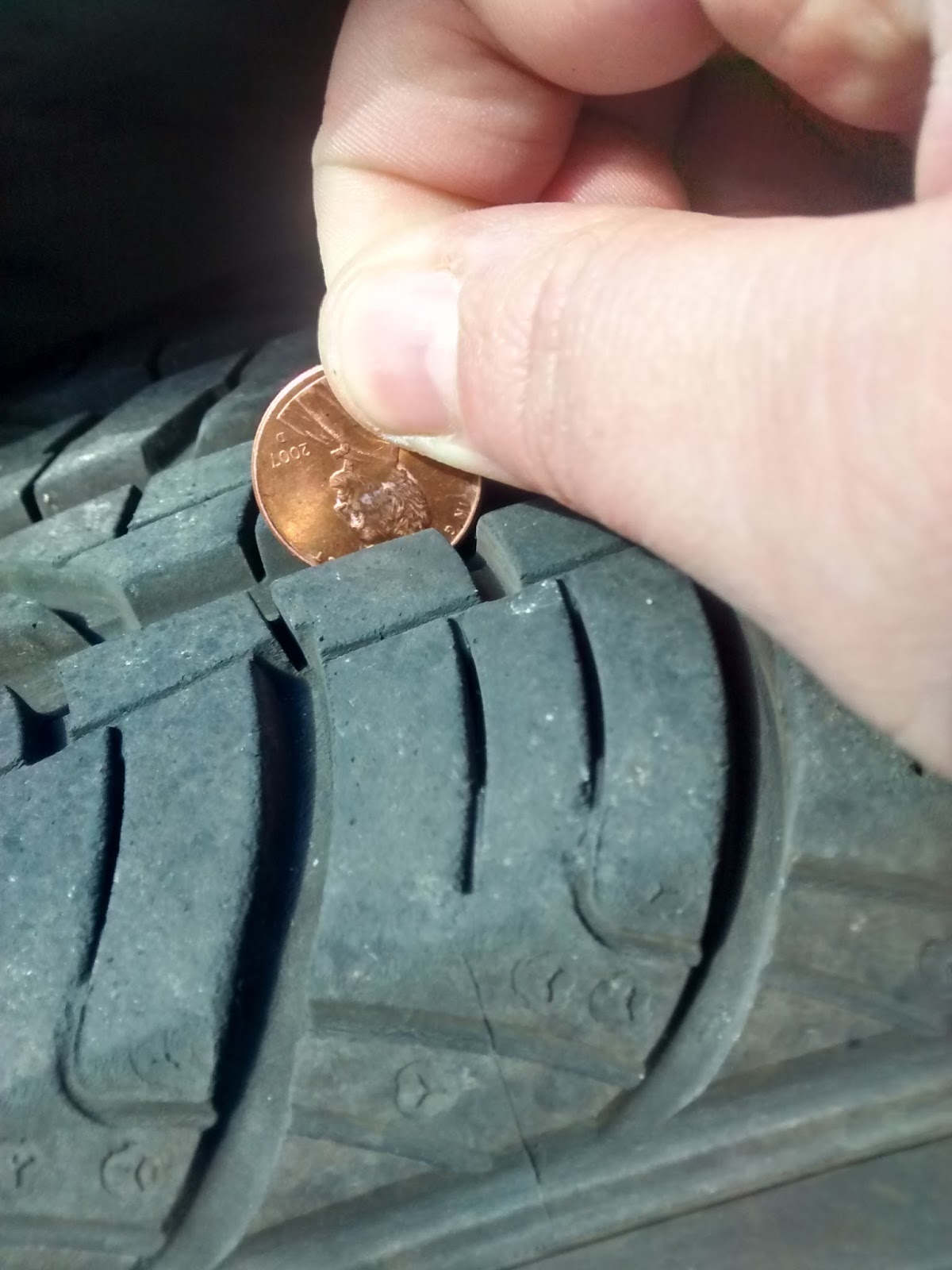
Check your tires: Think of your tires as the sneakers for your car. If your sneakers are worn down you could slip on the ice. The same thing can happen with little or no tread on your tires. A good way to tell if you have plenty of tread is to place a penny in the grooves. If the top of Lincoln’s head is partially covered then you have enough tread.


Another important tire element to remember is tire pressure.  Every 10 degree change in outside temperature can cause your tire’s pressure to gain or lose one PSI.

Fill ‘er up
: It is always wise to keep your gas tank at least half full during the colder months. If your tank is below half, it the chance of a gas line freeze increases. A full gas tank full also ensures that you can stay warmer longer if you become stranded while traveling.

Check your car’s heater and defrost:
You may be able to survive quick trips without a working car heater but if the defrost doesn’t work, driving can become dangerous.  During inclement weather, snow and ice can build up fast on your windshield and visibility can disappear rapidly.  Don’t wait until the last minute to get this fixed.


And finally, before you take to the road, remember that one of the best ways to be prepared is to check the road conditions at Kandrive.org or by dialing 511.